
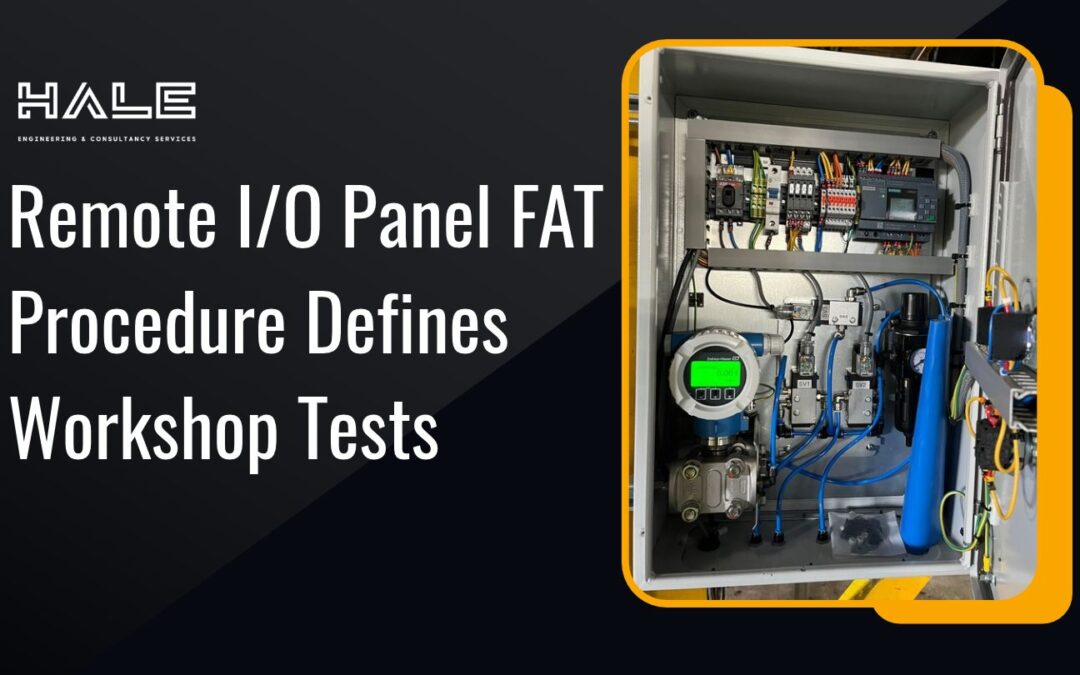
An operator sees a temperature on screen. A remote input/output (I/O) panel sees an electrical signal. Hale Engineering Consultancy & Services Ltd reviewed the panel drawings and prepared a factory acceptance test (FAT) procedure that defined how engineers would check each analogue input before the panel went to site.
The procedure specified five test currents across the 4–20 mA range and a clear acceptance criterion for each reading. It also identified what the site team would need to verify the displayed temperature, from the transmitter’s measuring range to the controller settings that convert the signal into degrees.
Project Overview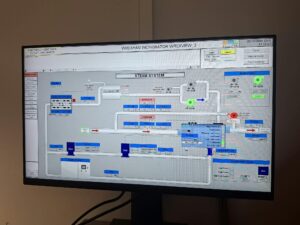
The panel was designed to connect field instruments and electrical contacts to a controller elsewhere on the plant. Hale Engineering reviewed the 14-sheet drawing set and bill of materials to establish what engineers could verify in the workshop before dispatch.
Operational Challenge and Risks
The drawings showed thermocouple symbols on 4–20 mA input circuits. Without instrument datasheets, engineers could not confirm whether a transmitter would convert each temperature measurement into the current signal the panel expected. That uncertainty limited what a workshop test could establish about the temperature an operator would see.
Engineering Assessment
Engineers compared the schematics with the parts list. The drawings showed 24 fused positions, while the list specified 20 fuse terminals. Eight interposing relays appeared on the schematics, but the parts list omitted them and the drawings left their coil voltage unspecified.
The rack power supply also needed clarification. The parts list described a DC supply, but the catalogue number identified an AC-input model. The drawings left its feed unclear. Engineers flagged the model and supply connection for confirmation before energisation.
Hale Engineering’s Remote I/O Panel FAT Procedure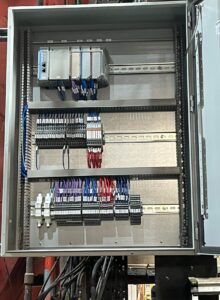
The work included defining how to simulate analogue signals, switch digital inputs and measure relay output contacts. Engineers specified which readings to record so a witness could compare the measured values with the acceptance criteria.
Equipment and Network Strategy
The design used Allen-Bradley Compact I/O and an EtherNet/IP adapter. The plant controller would read inputs and command outputs over the network. For the workshop, the procedure specified a test controller and switch so engineers could check the panel independently of the plant network.
Factory Test Planning, Safety and Verification
The procedure called for electrical checks before applying power. For each analogue input, it specified five test currents from 4 to 20 mA at the panel terminals. The input module reading had to be within 0.1 mA of each applied value.
Results and Operational Benefits
Hale Engineering issued the test procedure and logged eight open items with actions for review. The engineering manager could see which drawing details needed a decision before testing and which checks, including instrument scaling and end-to-end loop checks, belonged on site.
Why This Engineering Approach Matters 
A panel can read an injected current accurately while the temperature displayed to an operator is wrong. Verifying that temperature also requires the transmitter range and the settings that convert current into degrees.
Frequently Asked Questions
What can a workshop test establish about an analogue input?
Injecting a known current at the terminals allows engineers to check the panel wiring and the value the input module reports.
Does the plant network need to be available?
The procedure allows a workshop controller and switch to communicate with the panel adapter independently of the plant network.
Did the panel pass its factory acceptance test?
The issued procedure defines the acceptance criteria. Its results and witness sign-off fields are blank.
Contact Hale Engineering to discuss the drawings and acceptance tests for your remote I/O panel.