
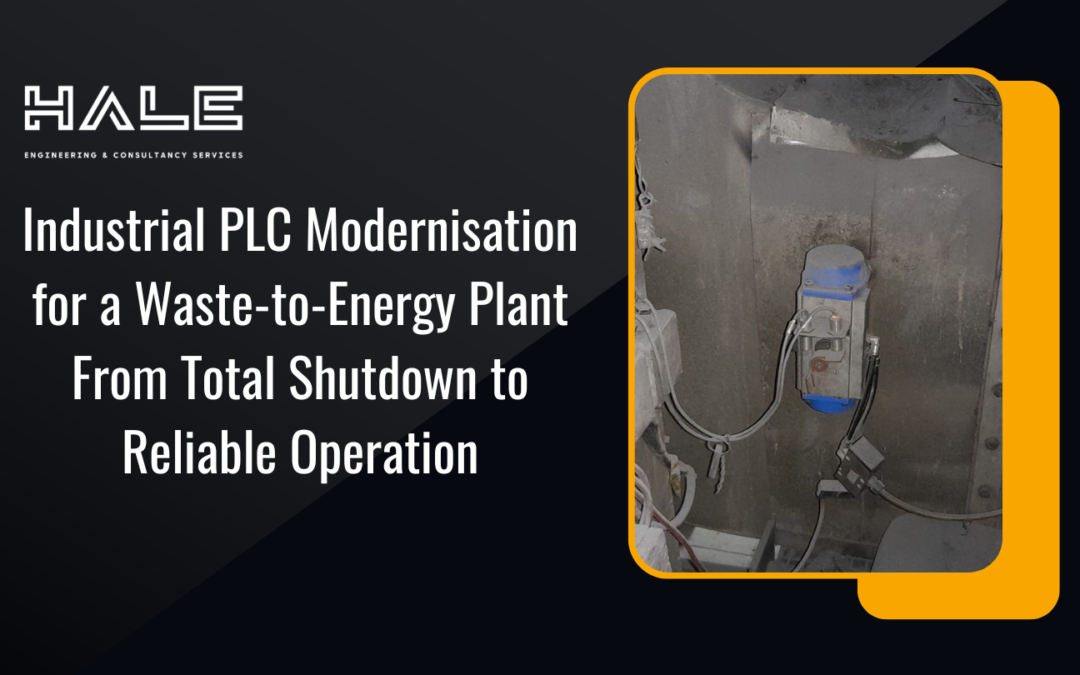
Incineration plant control system upgrade projects are often driven by ageing equipment, repeated faults, poor circuit selectivity and limited visibility across critical plant systems. A single failed sensor, damaged cable or shared fuse can cause unexpected shutdowns, increase safety risks and place added pressure on maintenance teams. This case study explains how targeted electrical redesign, improved PLC feedback and safer cable routing reduced the risk of cascading failures, improved fault diagnosis and strengthened long-term reliability at a Waste-to-Energy facility.
The Operational Problem: One Fault, Total Shutdown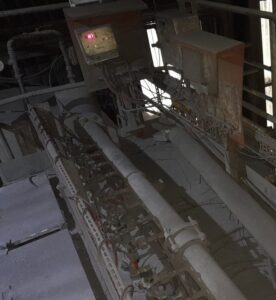
Reducing downtime in industrial plants starts with identifying where one component can interrupt an entire process. At this facility, multiple proximity sensors and motorised dampers were supplied through one common fuse. A cable routed close to the incinerator had deteriorated under prolonged heat exposure and, when it failed, the shared fuse tripped and removed power from several field devices.
The result was a total plant suspension. Maintenance teams could not isolate the fault quickly, while the existing arrangement meant another local failure could produce the same plant-wide consequence.
For the site management team, this created operational, safety and commercial risk. Unplanned shutdowns affected continuity, fault finding was inefficient, and engineers had to work close to high-temperature equipment during investigation and repair.
The Engineering Solution: Selective Protection and Better Diagnostics
The industrial automation support began with emergency PLC fault finding to isolate the immediate problem and restore temporary operation. Hale Engineering then developed technical proposals and schematic drawings for a more resilient electrical design.
The shared 110V and 24V supplies were divided into ten independently fused circuits, with the protective devices centralised beside the Allen-Bradley PLC control panel. This control panel upgrade created true circuit selectivity: a future fault in one cable, sensor or field device would isolate only the affected circuit rather than stopping the wider system.
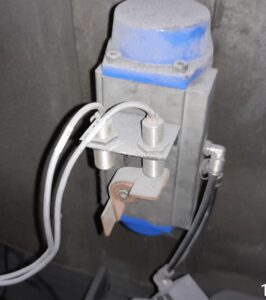
Improving diagnostics and maintainability was equally important. Eight heavy-duty 30 mm, three-wire proximity sensors were installed, together with two output solenoid valves. Each mechanical damper received two sensors for the open position and two for the closed position, providing redundant feedback directly to the PLC.
Safer Electrical Integration for Industrial Sites
Electrical integration for industrial sites must consider cable routing, temperature, access and maintenance exposure as well as electrical performance.
A new 100-metre elevated route was designed using the existing heavy-duty cable trays, approximately five metres above ground and away from the incinerator’s high-temperature surface. This reduced thermal stress and removed a known cause of recurring cable degradation.
The work required careful machine safety engineering, scaffolding and scissor-lift access, all completed within a restricted shutdown window. Commissioning and testing covered the new fused circuits, sensors, solenoid outputs and PLC feedback signals.
Key Improvements Delivered
- Ten independently protected 110V and 24V circuits
- Elimination of the electrical single point of failure
- Centralised fault isolation beside the Allen-Bradley PLC panel
- Redundant open and closed damper position feedback
- Safer cable routing away from the high-temperature zone
- Faster fault diagnosis and more efficient maintenance
- Reduced risk of cascading trips and plant-wide shutdowns
From Reactive Repair to Reliable Operation
This project demonstrates the practical value of industrial PLC modernisation without forcing a full legacy PLC migration. By combining selective protection, improved field feedback, safer routing and disciplined commissioning and testing, the plant gained a more maintainable and resilient control system.
For senior site leaders, long-term engineering support should not simply restore failed equipment. It should remove recurring weaknesses, improve diagnostics and protect operations before the next fault becomes another full shutdown.