This incinerator control system upgrade case study explains how control system risk can build over time across incineration and industrial process sites. It does not always appear suddenly; it often develops through repeated drive faults, ageing protection devices, limited diagnostics, difficult fault finding and increasing pressure on maintenance teams to keep critical equipment running with reduced visibility.
The goal was to modernise the plant’s ageing motor control system to support long-term reliability, improve fault response and give site teams clearer information from critical plant assets. At this industrial incineration facility, the existing system had reached the point where improved motor protection, diagnostic visibility and maintainability were required.
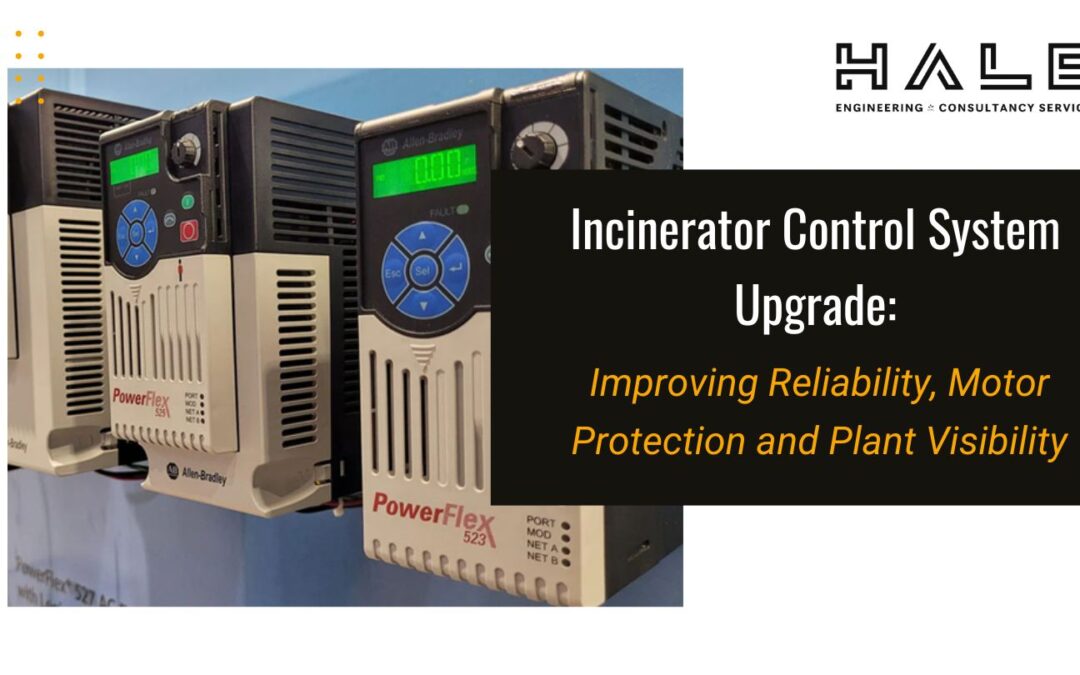
Hale Engineering completed a major control and motor control upgrade, replacing legacy drive and motor protection equipment with a modern Allen-Bradley solution using PowerFlex variable speed drives and E300 Electronic Smart Overload Relays.
The Site Challenge
The plant was operating with ageing drive technology and traditional electromechanical overload devices. While this type of equipment can continue to function for many years, it often creates practical challenges for busy industrial sites.
The main issues included: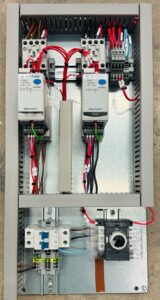
- limited visibility of motor condition and performance;
- reduced diagnostic information during trips or abnormal conditions;
- increased maintenance time during fault finding;
- older protection technology with limited communication capability;
- difficulty standardising support across critical equipment;
- higher risk of unplanned downtime affecting plant operations.
For site managers, engineering managers and operations teams, these issues are not only technical concerns. They affect reliability, maintenance planning, safety confidence and the ability to recover quickly when equipment fails.
The Engineering Solution
Hale Engineering delivered a full motor control modernisation package, including:
- replacement of legacy drives with Allen-Bradley PowerFlex drives;
- installation of Allen-Bradley E300 Smart Motor Overload Relays;
- integration into the existing plant control and monitoring architecture;
- improved motor protection and fault detection;
- standardised drive and overload technology across critical assets;
- enhanced communication, diagnostics and control-room visibility.
The result is a more modern, network-capable and maintainable motor control system, designed to support the demands of a live incineration environment.
Why PowerFlex Drives Were Selected
Allen-Bradley PowerFlex drives provide stable speed and torque control, which is essential for equipment operating under variable and demanding process conditions. They also include built-in protection against issues such as overload, overcurrent, voltage irregularities, phase loss, thermal stress and stall conditions.
For the site team, this means improved control performance and clearer fault information when abnormal conditions occur. Instead of relying only on local checks and manual investigation, operators and engineers can access better drive status, alarms and performance data through the control system.
Why E300 Smart Overloads Were Installed
The E300 Electronic Smart Overload Relays provide a significant improvement over traditional overload protection. They monitor motor performance in real time and provide intelligent protection against overload, phase imbalance, phase loss, stall, underload and thermal stress.
This improves the accuracy of motor protection and gives maintenance teams clearer information when problems develop. It also supports faster troubleshooting and reduces reliance on manual panel inspection.
Operational Benefits Delivered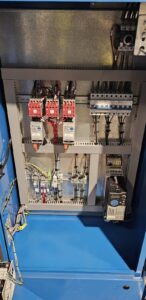
The completed upgrade provides practical benefits across the plant, including:
- improved motor reliability and equipment protection;
- faster fault detection and diagnosis;
- reduced troubleshooting time after trips;
- better control-room visibility of motor and drive status;
- improved process control stability;
- a more standardised and maintainable control architecture;
- stronger support for long-term site reliability.
Conclusion
This project represents an important step in modernising the incineration facility’s control and motor protection systems. By replacing outdated technology with a fully integrated Allen-Bradley PowerFlex and E300-based solution, the site now has improved visibility, stronger motor protection and better diagnostic capability.
For industrial facilities operating ageing control systems, this type of upgrade is not simply an equipment replacement. It is a practical investment in reliability, safety confidence, maintenance efficiency and long-term operational resilience.